Crazy Horse Leather: What It Is, Why It’s Special & How to Care for It
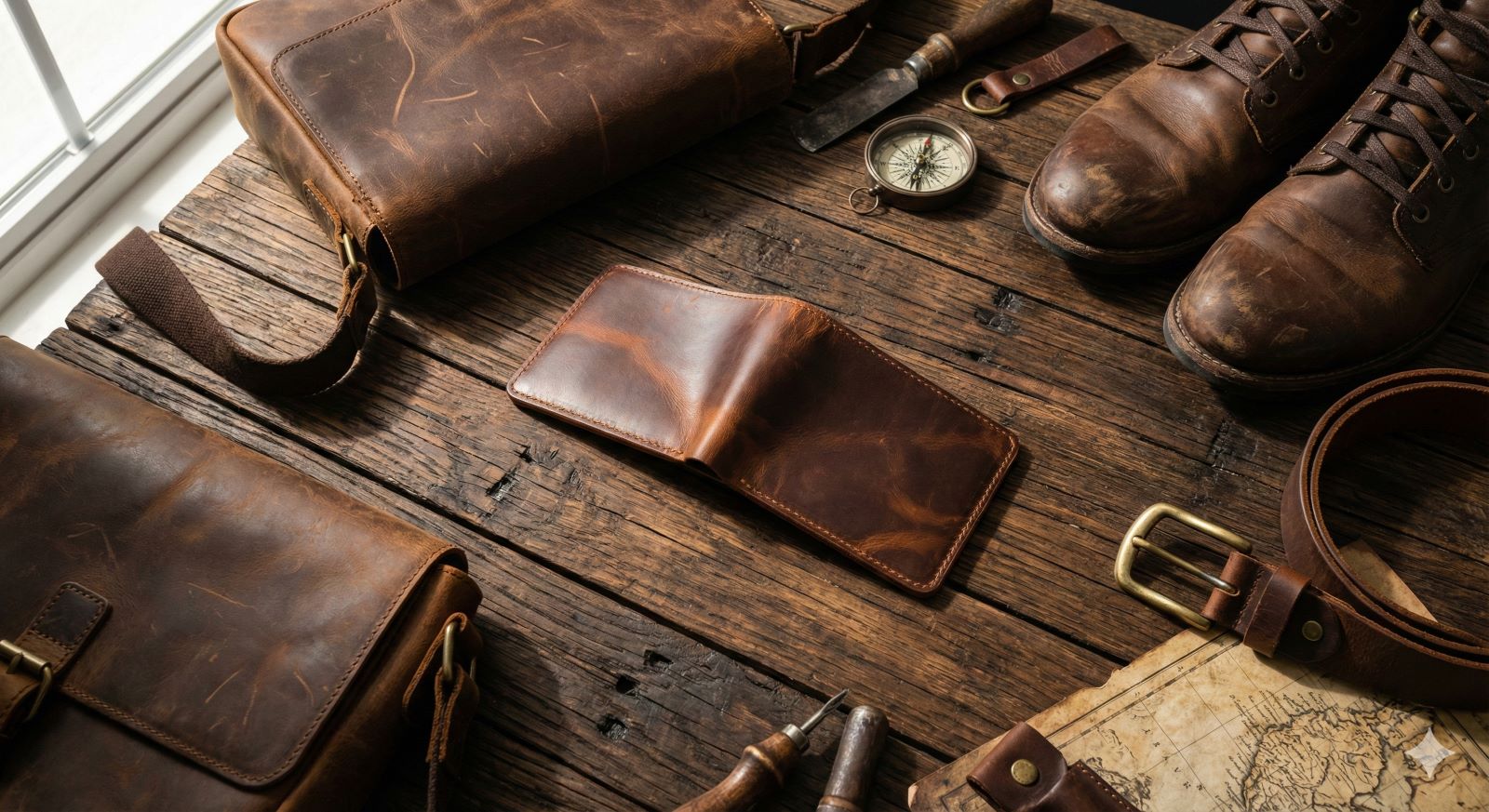
Crazy horse leather is full-grain cowhide infused with oils and waxes that create a pull-up effect, fast patina development, high durability, and a vintage matte finish. This oil-rich structure delivers strong scratch recovery, natural water resistance, and long-term fiber stability.
What Is Crazy Horse Leather?
Crazy horse leather is full-grain cowhide infused with high levels of natural oils and waxes to produce a distressed, pull-up finish. Full grain structure preserves dense collagen fibers, which increases tensile strength and supports decades of wear.
Crazy horse leather uses oiled surfaces, deep aniline penetration, and fiber-level lubrication, which create visible color shifts when compressed. These color shifts define the pull-up effect, a phenomenon created when pressure displaces oils inside the hide and exposes lighter tones beneath the surface.
Crazy horse leather is never made from horses. Tanners historically marketed it for saddles, and the equestrian aesthetic inspired the name—not the animal source.
Crazy horse leather is also known as “saddle leather”, “pull-up leather”, and “distressed leather”, although “pull-up leather” is the most technically accurate term for its oil-movement behavior.
Pull-Up Effect: The Scientific Explanation
The pull-up effect occurs because:
- Oils and waxes migrate when leather fibers flex or compress.
- Light scatters differently across compressed areas, producing lighter tones.
- Re-expansion of fibers redistributes oils, returning the original shade.
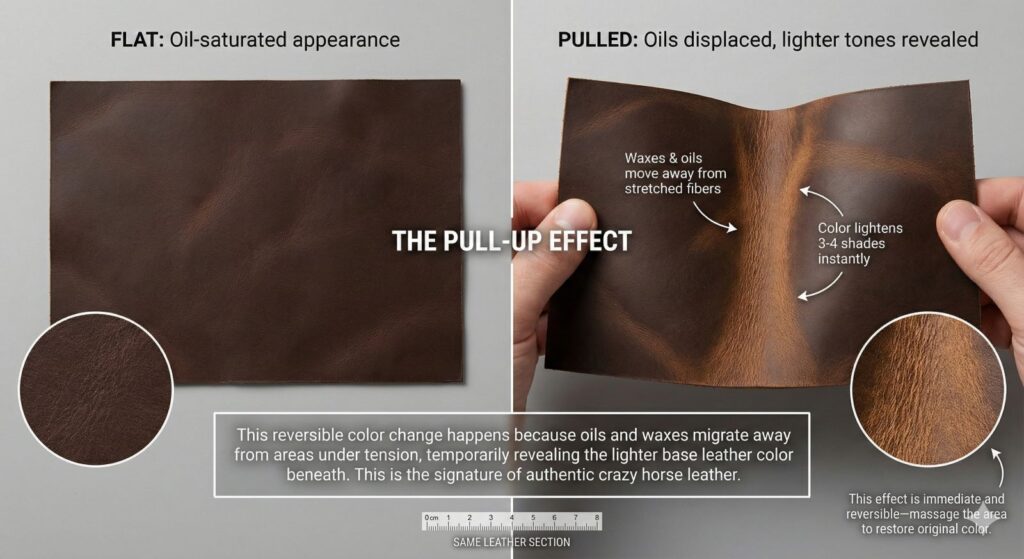
These microstructural shifts make every scratch, bend, or fold produce unique visual patterns.
Why Is It Called Crazy Horse Leather?
Crazy horse leather derives its name from traditional saddle-making practices. Tanners originally created heavily oiled full-grain hides for rugged horseback gear because riders required high flexibility, high grip, and high water resistance.
Leatherworkers borrowed the name “crazy horse” from older saddlery trade terms, where “crazy” described heavy wax saturation and “horse” referenced equestrian gear. No part of the production uses horsehide; the name is purely historical.
The leather’s equestrian-inspired aesthetic—matte finish, deep color tones, and distressed surface—reinforced the term. Over time, manufacturers standardized the name for bags, boots, belts, and wallets.
What Makes Crazy Horse Leather So Special?
Crazy horse leather exhibits unique aging behavior, rapid patina development, and high durability because its fibers contain elevated oil and wax content. These attributes create strong resistance to wear, scuffs, and moisture.

Key Attributes
- Aging & Patina: Oils oxidize and migrate as fibers flex, creating darkened zones and rich character within months.
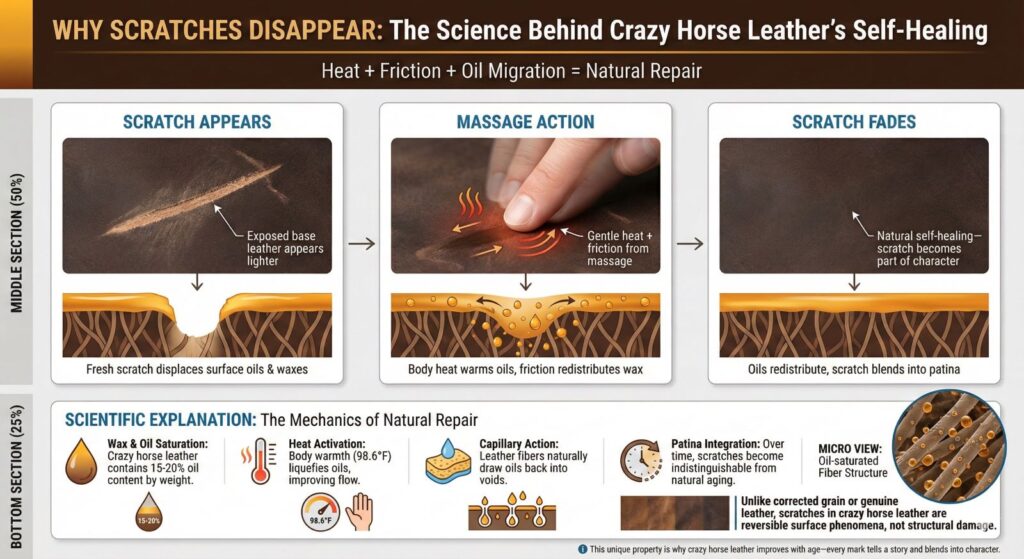
- Scratch Behavior: Light scratches appear instantly because surface fibers shift, but they fade when rubbed as heat redistributes waxes.
- Matte Vintage Finish: High wax saturation reduces surface shine and enhances rustic texture.
- Water Resistance: Oils repel water droplets, which create temporary marks that fade as moisture evaporates and surface oils rebalance.
Microstructural Explanation
Leather fibers act like micro-capillaries. During motion:
- Friction warms the fibers.
- Waxes melt microscopically.
- Lubricants redistribute, darkening or lightening zones based on pressure.
This science gives crazy horse leather a more dynamic visual life cycle than standard full-grain leather.
Why Is Crazy Horse Leather So Popular?
Crazy horse leather is popular because its visual character, durability, and aging behavior align with the preferences of EDC users and leather enthusiasts.
Core Popularity Drivers
- Character-rich finish: Each scratch, fold, and patina mark increases uniqueness.
- Durability under daily carry: Bags, boots, wallets, and belts maintain structure for 10–20 years.
- Rugged aesthetics: Matte textures and color variation match modern vintage style.
- Story-driven aging: Consumers value objects that visibly record use patterns.
This material’s combination of strength, beauty, and low maintenance gives it broad appeal across functional and fashion markets.
How Is Crazy Horse Leather Made?
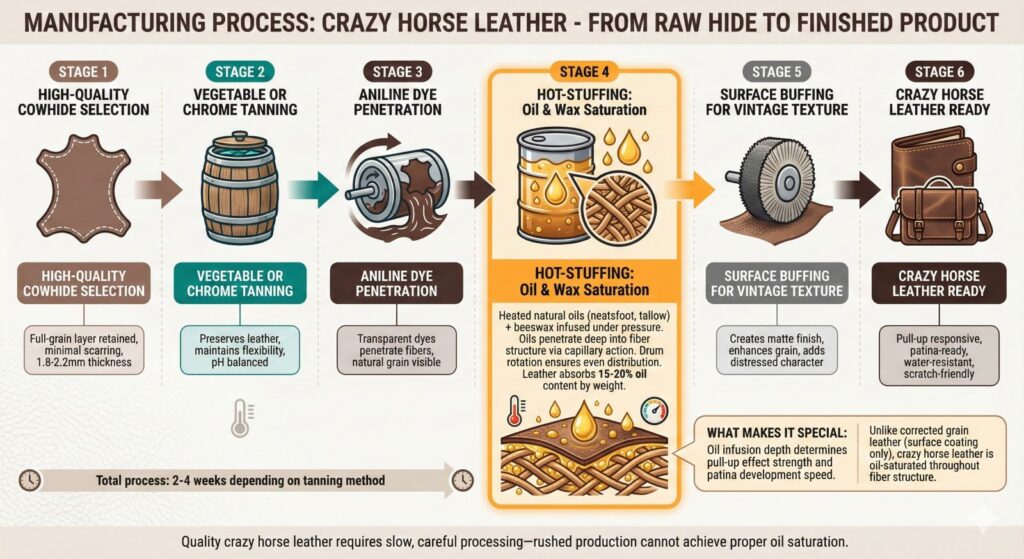
Crazy horse leather production uses premium full-grain cowhide selected for strength, density, and fiber quality. Tanners avoid corrected-grain cuts because sanding destroys structural integrity.
Processing Steps
- Full-Grain Selection
Tanners choose hides with minimal surface defects. Typical thickness ranges from 1.8–2.4 mm. - Drum Dyeing / Aniline Dyeing
Dyes penetrate deeply, preserving natural grain markings and enabling rich color variation. - Hot-Stuffing or Drum Oil Infusion
Oils, waxes, and greases enter leather fibers through heat-driven diffusion. Hot-stuffing forces lubricants into the matrix, creating long-term flexibility and water resistance. - Moisture & pH Balancing
Proper pH (around 3.5–4.5) prevents brittleness and stabilizes collagen fibers. - Buffing and Burnishing
Light buffing introduces the distressed finish; burnishing smooths edges and enhances wax distribution.
How Oils Enter the Fibers
Heat causes wax molecules to expand and penetrate fiber networks. As the hide cools, oils solidify inside the matrix, forming long-lasting lubrication reservoirs. This internal reservoir powers the pull-up effect and scratch-fade behavior.
What Are the Advantages of Crazy Horse Leather?
Crazy horse leather provides durability, water resistance, patina richness, and low maintenance, outperforming many leather types in longevity and appearance.
| Advantage | Explanation |
|---|---|
| Durability | Full-grain fibers increase tensile strength and resist tearing. |
| Water Resistance | Oils repel droplets and reduce absorption. |
| Scratch Responsiveness | Surface marks fade with simple rubbing due to wax redistribution. |
| Patina Development | Oxidation and friction produce deeper, richer tones. |
| Low Maintenance | mink Oil saturation reduces conditioning frequency. |
| Longevity | Products often last 10–20 years with basic care. |
How to Care for Your Crazy Horse Leather
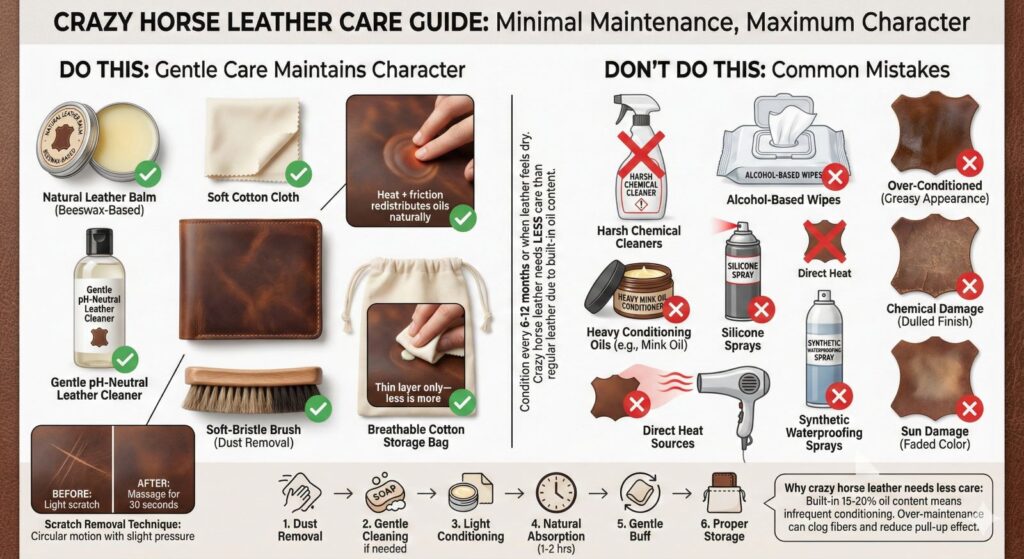
Crazy horse leather requires minimal maintenance, but correct leather care preserves color, oils, and structural integrity.
Step-by-Step Care
- Remove Dust
Use a soft microfiber cloth weekly. - Spot-Clean with Mild Cleaner
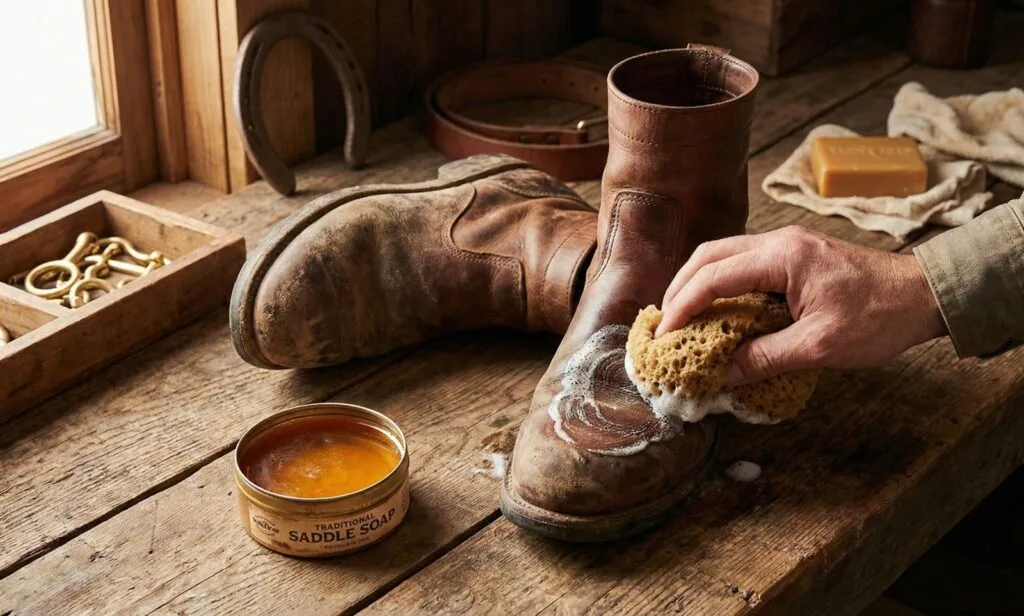
Apply a tiny amount of saddle soap or mild leather cleaner when necessary.
(For full routines, see how to use saddle soap.) - Apply Leather Balm
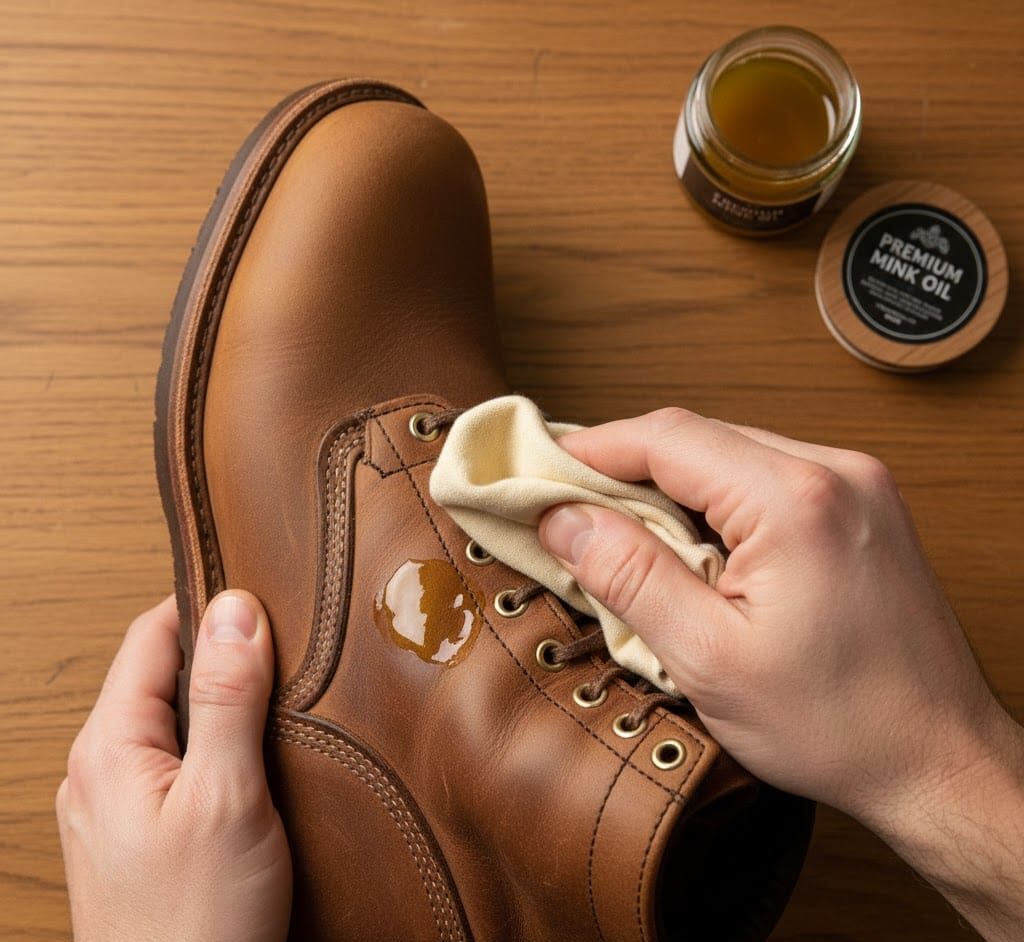
Use a natural balm sparingly. Too much conditioning saturates fibers and darkens color unevenly. - Allow Slow Absorption
Let the item rest 30–60 minutes so oils penetrate evenly. - Buff the Surface
Use a horsehair brush to restore the matte finish. - Store Away from Heat & Sun
UV exposure oxidizes oils too quickly and causes color shifts.
DON’Ts (Critical)
- Avoid alcohol wipes, which strip oils.
- Avoid harsh chemicals, detergents, or solvents.
- Avoid over-conditioning, which collapses fibers.
- Avoid soaking in water, which disrupts oil balance.
Why Scratches Fade When Rubbed
Rubbing generates localized heat, which softens waxes. Heated wax migrates back into the disturbed area, filling shallow scratches and restoring uniform color. This process demonstrates the dynamic oil mobility inside pull-up leather.
Crazy Horse FAQs
What animal does crazy horse leather come from?
Crazy horse leather always comes from cowhide, not horsehide. Full-grain bovine fibers deliver the strength, thickness, and density required for heavy wax infusion.
What is the difference between crazy horse leather and genuine leather?
Crazy horse leather uses full-grain layers with intact fiber density.
Genuine leather uses lower-grade split layers with weaker structure, painted finishes, and shorter lifespan.
Why is it called crazy horse leather?
Tanners named it after saddlery traditions and equestrian-inspired aesthetics, not because of horse material.
Does crazy horse leather darken over time?
Crazy horse leather darkens as oils oxidize, absorb UV, and redistribute during flexing.
Is crazy horse leather waterproof?
Crazy horse leather is water-resistant, not waterproof. Oils slow absorption; droplets may create temporary marks that fade after drying.
Does crazy horse leather scratch easily?
Yes. Surface fibers register light scratches easily, but these scratches fade when rubbed because heat moves waxes back into place.
How long does crazy horse leather last?
Crazy horse leather lasts 10–20 years with correct storage and periodic leather conditioning.
Is crazy horse leather real leather?
Yes. It is real full-grain leather, the highest quality grade.
Is crazy horse leather good for bags and wallets?
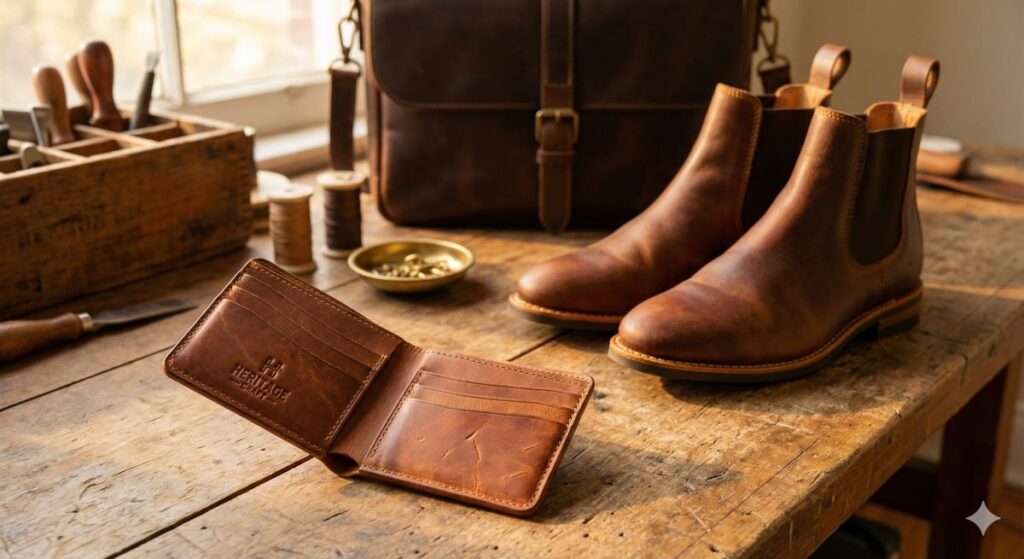
Yes. High tensile strength and low maintenance make it ideal for bags, leather wallets, belts, boots, and EDC gear.