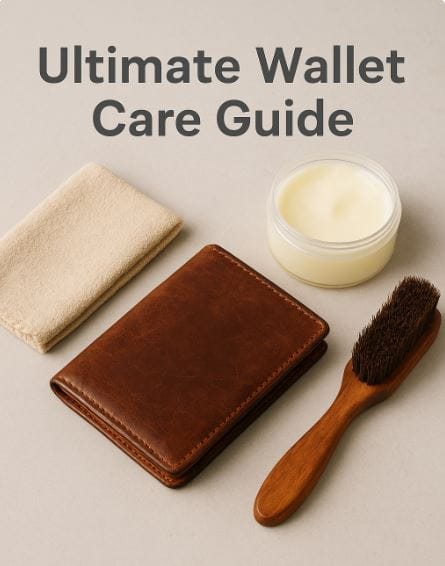
Ultimate Wallet Care Guide: Clean, Condition, Repair & Protect Every Type of Leather Wallet
Why Wallet Care Matters
A premium leather wallet isn’t just a functional accessory; it’s a statement piece and a personal companion that ages with you. Unlike bags or shoes, wallets endure constant handling, friction in pockets, and exposure to sweat, oils, and cards.
Over time, they can stretch, lose color, or dry out if not properly cared for. This guide brings together expert advice, industry research, and real-world practices to provide the most comprehensive resource on leather wallet care available in 2025.
Whether your wallet is full-grain, vegetable-tanned, or aniline leather, this guide covers cleaning, conditioning, protecting, and repairing. By following these steps, you’ll not only extend the life of your wallet but also preserve its natural beauty and patina.
Leather Types & Why Care Differs
Not all wallets are created equal. Understanding your leather type determines how you clean and condition it.
1. Full-Grain Leather
- Most durable and premium.
- Develops a rich patina over time.
- Needs light conditioning every 6–12 months.
2. Top-Grain Leather
- Sanded to remove imperfections.
- Softer feel but less patina development.
- Needs slightly more frequent conditioning.
3. Vegetable-Tanned Leather
- Natural, environmentally friendly tanning.
- Highly sensitive to water and stains.
- Benefits from wax-based conditioners.
4. Aniline Leather
- Dyed without protective coating.
- Luxurious but stain-prone.
- Requires gentle, pH-balanced products.
5. Nubuck / Suede Wallets
- Soft and velvety surface.
- Should not be treated with oils or heavy conditioners.
- Requires special sprays and suede brushes.
Daily Habits That Extend Wallet Life
- Rotate wallets if you own more than one to reduce wear.
- Avoid overstuffing — stretched slots rarely return to shape.
- Keep away from water, heat, and direct sunlight.
- Wipe weekly with a soft dry cloth.
- Wash hands before use — natural oils and sweat accelerate dark spots.
how to clean a leather wallet: Step-by-Step Cleaning Protocol
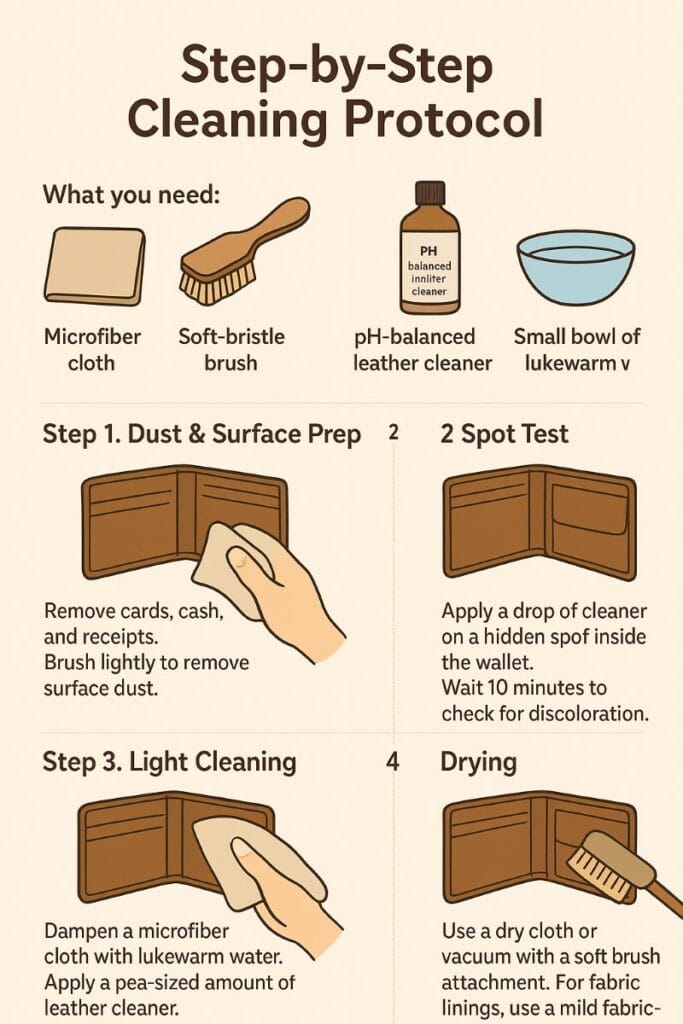
What you need: microfiber cloth, soft-bristle brush, pH-balanced leather cleaner, small bowl of lukewarm water.
Step 1: Dust & Surface Prep
- Remove cards, cash, and receipts.
- Brush lightly to remove surface dust.
Step 2: Spot Test
- Apply a drop of cleaner on a hidden spot inside the wallet.
- Wait 10 minutes to check for discoloration.
Step 3: Light Cleaning
- Dampen a microfiber cloth with lukewarm water.
- Apply a pea-sized amount of leather cleaner.
- Gently wipe wallet in circular motions.
Step 4: Drying
- Pat gently with a dry cloth.
- Let wallet air dry naturally (no sunlight, no hair dryers).
Step 5: Interior Cleaning
- Use a dry cloth or vacuum with a soft brush attachment.
- For fabric linings, use a mild fabric-safe cleaner.
how to condition a leather wallet
Conditioning keeps leather supple and prevents cracking.
When to Condition:
- Every 6–12 months (full-grain).
- Every 3–6 months (top-grain, vegetable-tanned).
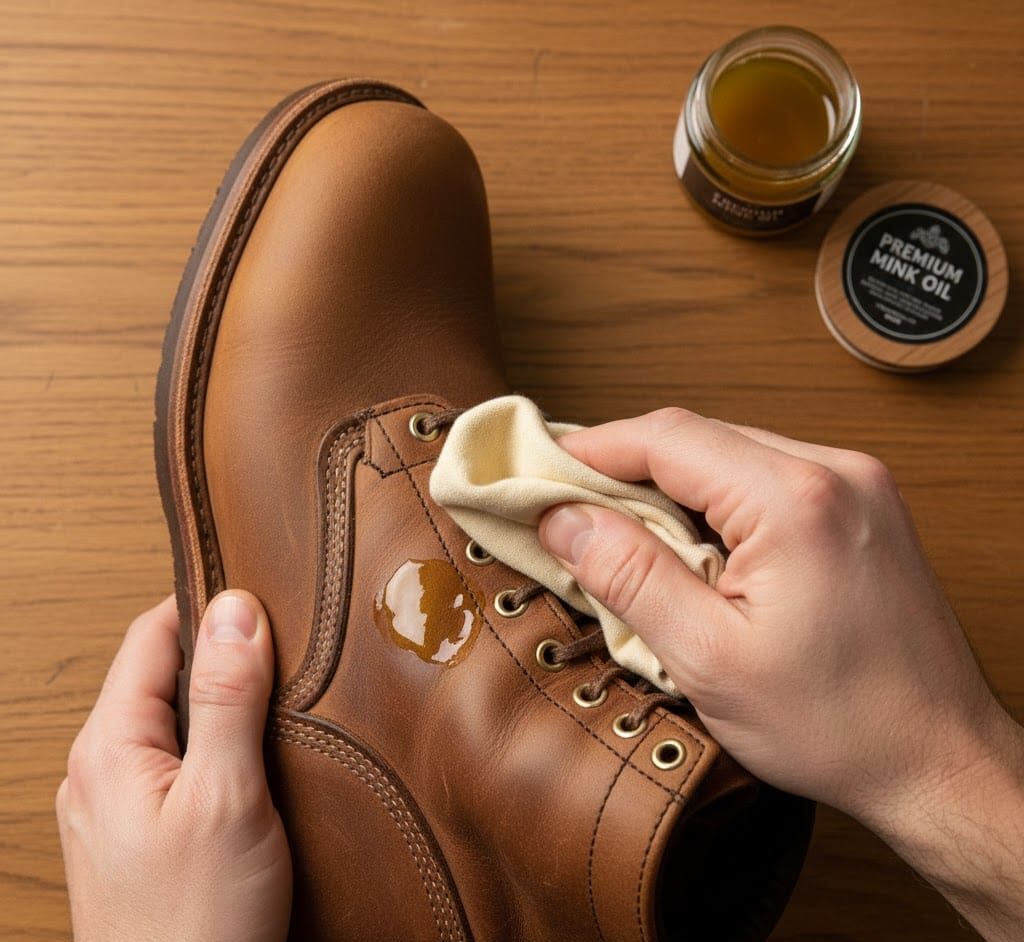
Step-by-Step Conditioning:
- Place wallet on a clean cloth.
- Use a small amount of conditioner (pea-sized).
- Massage gently into the leather using fingers or cloth.
- Leave for 20 minutes to absorb.
- Buff with a soft dry cloth.
Pro Tip: Always spot test before conditioning the entire wallet.
Protecting Your Wallet
- Waterproof sprays (silicone-free) for nubuck and suede.
- Beeswax-based balms for vegetable-tanned leather.
- UV protectants if you live in sunny climates.
Common Wallet Problems & Fixes
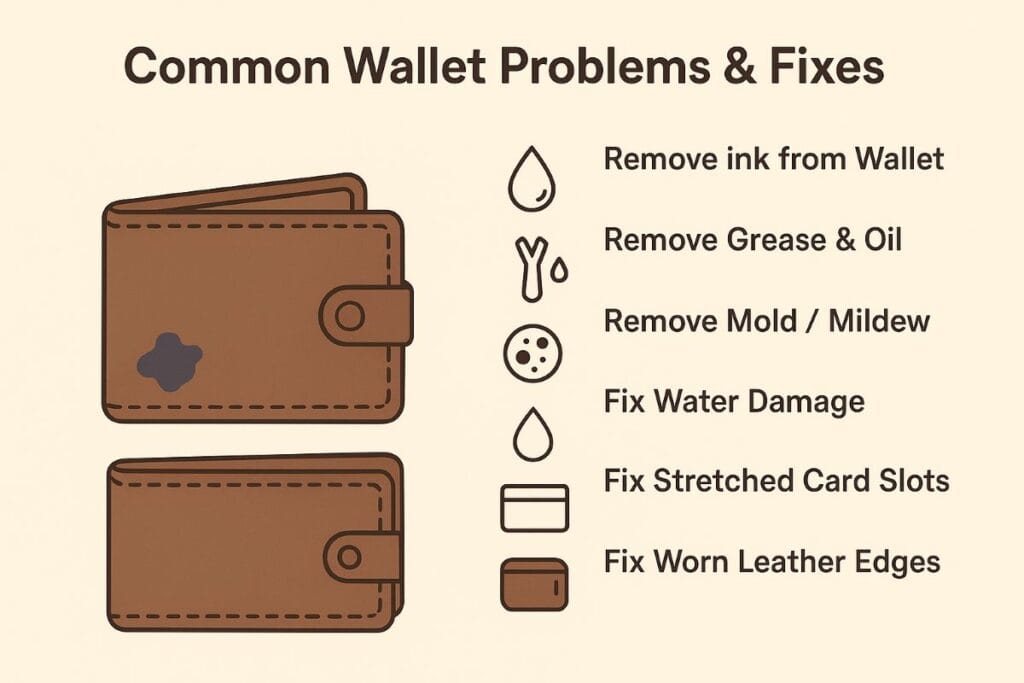
Problem 1: How to Remove ink from Leather Wallet
- Blot immediately with dry cloth.
- Use leather-safe ink remover.
- If stain persists → professional care.
Problem 2: How to Remove Grease & Oil from Wallet
- Sprinkle cornstarch on affected area.
- Leave overnight, brush off.
- Repeat if needed.
Problem 3: How to Remove Mold / Mildew from Wallet
- Mix equal parts distilled water + white vinegar.
- Lightly dab mold spots.
- Dry in open, shaded area.
Problem 4: How to Fix Water Damage on leather Wallet
- Blot, never rub.
- Allow wallet to dry naturally.
- Condition afterwards.
Problem 5: How to Fix Stretched/Tighten Card Slots
- Insert cardboard cutouts instead of cards for a week.
- Avoid soaking or heat shrinking — risky for long-term damage.
Problem 6: How to Fix Worn leather Edges
- Lightly sand and apply edge paint repair kit.
- Buff gently.
When to Repair vs Replace a Wallet
- DIY fixes work for surface stains, conditioning, and light slot tightening.
- Professional repairs needed for stitching, edge paint, severe dye fading.
- If wallet is warped beyond recognition or structurally torn → replacement may be more cost-effective.
Leather Wallet Storage & Seasonal Tips
- Store wallets in breathable cotton bags, never plastic.
- Keep silica gel packs nearby to absorb humidity.
- Avoid stacking heavy objects on top.
- If storing for months, condition first.
best leather conditioner Recommendations (2025)
| Product Type | Recommended Option | Best For |
|---|---|---|
| Cleaner | pH-balanced liquid cleaner | General wallet cleaning |
| Conditioner | Beeswax-based conditioner | Veg-tan wallets |
| Conditioner | Lanolin-based balm | Full-grain leather |
| Suede Care | Waterproofing spray + suede brush | Nubuck/suede wallets |
(Note: Always test first — product performance may vary by leather type.)
Sustainability Angle: Caring for Leather Reduces Waste
Proper care can double or triple a wallet’s lifespan, preventing unnecessary waste. Choosing sustainable conditioners, avoiding harsh chemicals, and repairing instead of replacing contributes to a lower environmental footprint.
FAQs
Q1: How often should I clean my leather wallet?
A light wipe weekly and deep clean every 6–12 months is recommended.
Q2: Can I use olive oil or coconut oil on leather wallets?
No — these oils clog pores, darken leather unevenly, and accelerate decay. Use leather-specific conditioners instead.
Q3: How do I prevent my wallet from smelling?
Air out periodically, keep away from moisture, and store with silica gel.
Q4: Can I wash a leather wallet with soap and water?
Never soak. Mild pH-balanced cleaners only; water can stain and stiffen leather.
Q5: What’s the best way to remove mold from a wallet?
Distilled water + vinegar dab, air-dry, then condition.
Q6: Will conditioning darken my wallet?
Yes, slightly — always test on a hidden area first.
Q7: How do I fix stretched card slots?
Insert cardboard fillers, avoid overstuffing; extreme cases need professional repair.
Q8: Should I waterproof my leather wallet?
Yes, especially for suede/nubuck — but use silicone-free sprays.
Q9: How long should a premium leather wallet last?
With proper care, 8–12 years or more.
Q10: Can I restore faded color?
Yes, with leather dye or cream polish; severe fading requires professional help.
Conclusion
Leather wallets age beautifully when cared for properly. By following this guide — cleaning, conditioning, protecting, and repairing — your wallet will last years longer, develop a unique patina, and remain a timeless accessory. Treat it not just as a functional item, but as an investment in craftsmanship and sustainability.
[Image Placeholder: Closing shot of multiple wallets in pristine condition with caption: “Wallets that age with you.”]
Downloadable PDF Checklist: “Your 1-Minute Leather Wallet Care Routine” (link placeholder).
Author Bio: Written by Leatherica, leather craftsman & product designer with 10+ years in premium leather goods.